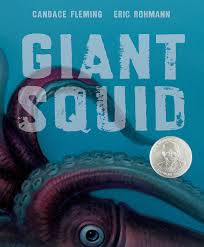
Giant Squid Author: Candace Fleming Illustrator: Eric Rohmann Published:2016 Robert F. Sibert Honor: 2016 Grade Level: 2-3
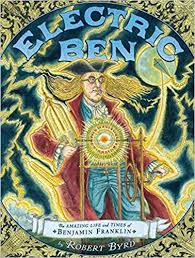
Electric Ben: The Amazing Life and Times of Benjamin Franklin Author: Robert Byrd Published; 2012 Robert F. Sibert Honor: 2013 Grade Level: 4-6
Seymour Simon’s Extreme Earth By Seymour Simon Published: 2012 Ages: 7-12
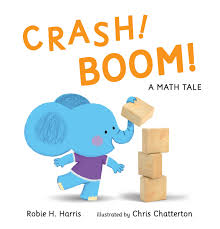
Crash! Boom! A Math Tale Author: Robie H. Harris Illustrator: Chris Chatterton Published: 2018 Math Concept Ages: 2-5
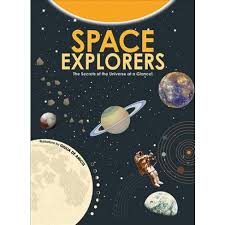
Space Explorers: The Secrets of the Universe at a Glance By Giulia de Amicis Published: 2017 Grade Level: 3-4
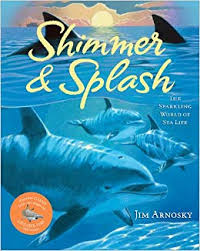
Shimmer & Splash: The Sparkling World of Sea Life By Jim Arnosky Published: 2013 Grade Level: 1-5
Featured Book:
According to Short et al, good informational text should be written in clear, direct language in an easy to understand style. The information should be accurate, current, and avoid personification. The information presented should encourage readers to analyze the text and offer explanations, and not just include facts. There should be a clear theme or idea that connects the information in the book. The text and pictures should be age appropriate, and the author should provide easy to understand captions. Finally, the book should be visually appealing and fit the content being represented (p.153) . Arnosky, in Shimmer and Splash: The Sparkling World of Sea Life, wrote and illustrated a book that met the requirements noted by Short et al up above. He takes his audience alongside him into the ocean environment. A naturalist, you feel like you are beside him as he takes photographs, sketches, and uses descriptive language to invite his reader into his visual and sensory experience of exploration. Arnosky reaches an audience of 1-5 graders. This wide range provides a book that appeals to a variety of students and would make an engaging read-aloud book for multiple students at differing levels of comprehension. Captions and labels are concise, easy to understand and locate. While not a chapter book, each section has a title and so has a bit of a chapter book feel.
Illustrations:
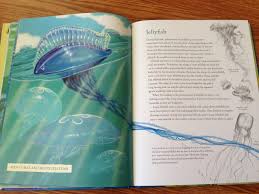
Arnosky provides an engaging back and forth between telling about his own experiences during his work as a naturalist, creating shaded pencil sketches as he would out in the field…
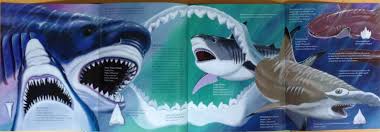
…and then brings the reader into beautiful 2-page spreads with vibrant colors and photograph-quality acrylic paintings of ocean life amidst labels and ocean-life facts.
Classroom Connection: Students will discuss with their group one new fact they learned about an ocean animal while listening to this book.
Reader’s Response: Before reading the book, the teacher will note that the author, Jim Arnosky, is a naturalist. As the story is read, students will use the text to decide what they think a naturalist might be. Once the story is read, and class discussion is over, students will be asked to think back to the story, using the text to write a short paragraph about what they think a naturalist” means, is, and/or does?
Elizabeth Started All the TROUBLE Author: Doreen Rappaport Illustrator: Matt Faulkner Published: 2016
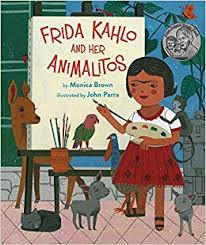
Frida Kahlo and Her Animalitos Author: Monica Brown Illustrator: John Parra Published: 2017
Fearless Flyer: Ruth Law and Her Flying Machine Author: Heather Lang Illustrator: Raul Colon Published: 2016
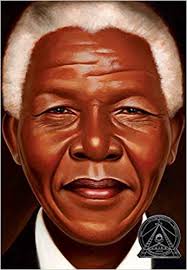
Nelson Mandela Author and Illustrator: Kadir Nelson Published: 2013
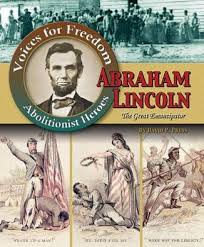
Abraham Lincoln: The Great Emancipator by David P. Press Published: 2013 Chapter Book: Grade 4-6
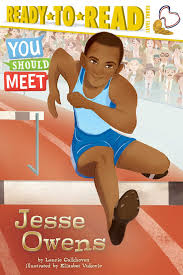
Ready*To*Read: You Should Meet Jessie Owens Author: Laurie Calkhoven Illustrator: Elizabet Vukovic Published: 2017 Easy Reader: Ages 6-8
Featured Book:
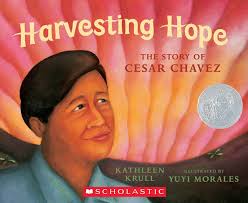
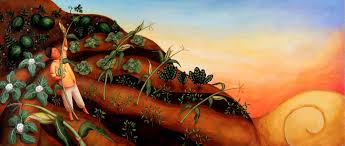
Harvesting Hope: The Story of Cesar Chavez Author: Kathleen Krull Illustrator: Yuyi Morales Pura Belpre Honor Book Published: 2003
After reading Chapter 11 of Essentials of Children’s Literature (Short et al., p.148-149), I found that Harvesting Hope: The Story of Cesar Chavez is a partial biography. This biography begins when Cesar Chavez is 10 years old and does not cover his entire life. I would say this is also a fictionalized biography since it is based on careful research of real events, but focuses on specific events that are dramatized. I found this book would appeal to young children and adults because it shares Chavez’s life from age 10 into adulthood. Additionally, it speaks to events that many would be able to relate to such as immigration, discrimination, unfair wages, unsafe work conditions, and racism. Chavez is presented with both faults and strengths. Krull tells her readers that Chavez was “shy, soft-spoken, and teased at school”. She also tells readers about his bravery as he formed a peaceful 340-mile protest, and chose to use his mind instead of resorting to violence when protesting.
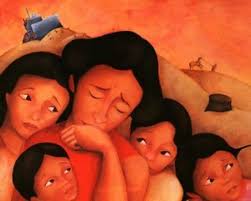
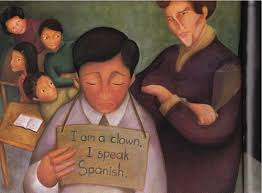
Illustrations: Yuyi Morales creates beautiful and emotion-filled illustrations that enhance the story and bring it to life. The expressions of her characters make you feel their emotions:
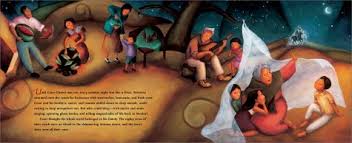
Morale’s use of color brings forth emotions of sadness, fear, pain, and calm:
Morales uses a variety of art mediums including acrylic paint, gouache, oil, tempera, and water color. Her colors are rich and reflect her Latin roots. Her style is impressionistic in this book and she uses exaggeration and minimization to highlight the emotion or idea of the page.
Classroom Connection: Students will discuss with their group what stood out to them in this book. As a class, students will share what they discussed. Students will work together as a class to paint a mural, using vibrant acrylic paints, creating scenes that describe the most influential part of the book for them. Mural will be displayed in the hall and/or shared during an assembly.
Reader’s Response: Students will use the Fab 5 to write in their notebooks: Who is the main character? Wants what? What does the main character want? But? What happens? So? What does the character decide to do to solve the problem? Then? How is the problem solved? How does the story end?
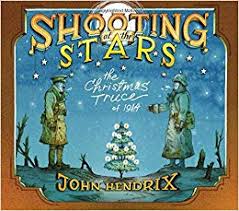
Shooting at the Stars: the Christmas Truce of 1914 Written and Illustrated by: John Hendrix Published: 2014
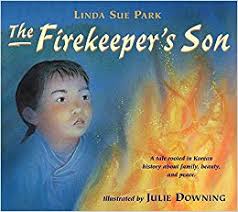
The Firekeeper’s Son Author: Linda Sue Park Illustrator: Julie Downing Published: 2004
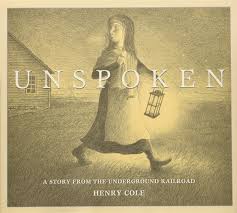
Unspoken Illustrated by Henry Cole Published: 2012
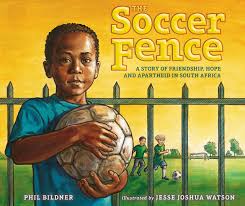
The Soccer Fence: A Story of Friendship, Hope, and Apartheid in South Africa Author: Phil Bildner Illustrator: Jesse Joshua Watson Published: 2014
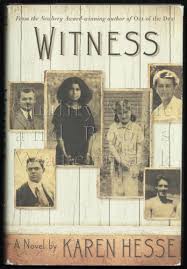
Witness A Novel by Karen Hesse Jacket Illustrator: Kim McGillivray Published: 2001
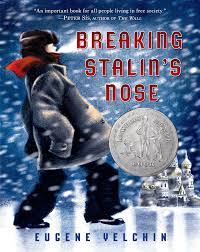
Breaking Stalin’s Nose Written and Illustrated by: Eugene Yelchin Published: 2011
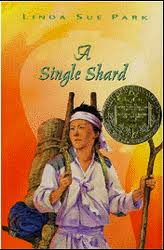
A Single Shard Author: Linda Sue Park Jacket Illustrators: Jean and Mou-sien Tseng Published: 2001
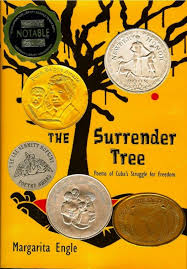
The Surrender Tree: Poems of Cuba’s Struggle for Freedom Author: Margarita Engle Jacket Illustrator: Edel Rodriguez Published; 2008
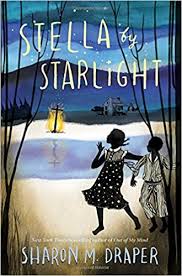
Stella by Starlight Author: Sharon M. Draper Jacket Illustrator: Sarah Jane Coleman Published: 2015
Overview of Chapter Books:
I discovered so many incredible books this week! While I wish that I could have read them all cover to cover, I was only able to browse through most. I selected the ones I found to be unique, varied, and compelling.
Witness by Karen Hesse (159 short pages) follows the lives of eleven characters, ages 6 to 66, some African American, some Jewish, who are impacted by the Ku Klux Klan moving to their town in Vermont. Hesse’s writing goes back and forth between characters. The book is narrated by these characters and is not arranged by traditional chapters.
Breaking Stalin’s Nose by Eugene Yelchin (151 short pages) is set in the Soviet Union and follows ten-year old Sasha Zaichik as he questions whether his dream to be a Soviet Young Pioneer is what he wants after all. The chapters are short and the illustrations compelling.
A Single Shard by Linda Sue Park (152 pages) is set in South Korea during the 1900s. This story follows Tree-ear, an orphan, who is described as a creative spirit. He discovers the work of master potter Min and soon embarks on a journey that helps him to discover his destiny.
The Surrender Tree by Margarita Engle (158 short pages) is a collection of poems that describe Cuba’s struggle for freedom. This book is broken into five sections: 1. The Names of the Flowers, 2. The Ten Year’s War, 3. The Little War, 4. The War of Independence, 5. The Surrender Tree.
Stella by Starlight by Sharon M. Draper (320 pages) follows Stella as she lives in the segregated south and encounters the Klan in her North Carolina town of Bumblee. This story was inspired by the diary of Draper’s grandmother.
Featured Book:
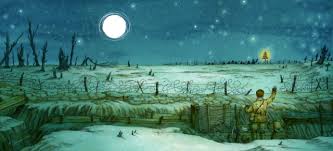
Shooting Stars:the Christmas Truce of 1914 by John Hendrix is an accurate, emotional, and compelling piece of historical fiction. This story is based on true events during World War I that Hendrix learned from reading letters and conducting interviews. However, Hendrix’s main character, Charlie, is fictional. Hendrix notes the purpose of Charlie’s story is to focus readers on the “point of view of the powerless” and those “living it[the war]”. His story is “not about politics, but people”. The setting in this book is “described in rich details that are accurate and authentic” for its time and place, includes characters who act and think as would be expected during this time, and contains “authentic and understandable” dialogue (ECL, p. 137). The one criteria I was a little unsure about was whether or not this book provided multiple perspectives about the event. It definitely does within the characters, but the author’s bias seemed clear to me throughout the book. While his opinion on this first World War is clear, I found the ideas he presents are important for adults and children to consider. This book creates opportunity to think about and discuss war, its effects, what it accomplishes, and for whom. Hendrix’s opening two pages brought tears to my eyes. To be honest, I had tears throughout this book. He uses descriptive language to make you feel like you are with Charlie, sitting in the trench, peering across No Man’s Land, and standing in the deep mud. Some of his best descriptions are about the mud: “thick, loamy foam churns” & “wretched…sticky…heavy”.
Illustrations:
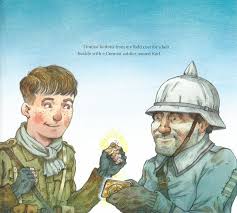
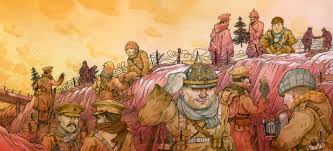
Hendrix used graphite, fluid acrylic washes, and gouache on Strathmore Vellum Bristol to create his illustrations. The colors and composition of each picture reflects the mood, time of day, and events. They add depth and meaning to this story. You can picture yourself sitting in the trenches, peering over the battle field, burying your dead, celebrating Christmas, and wishing for peace.
Charlie sitting in his trench.
Charlie sitting in his trench, writing a letter to his mother.
“I traded buttons from my field coat for a belt buckle with German soldier named Karl.”
“We spent most of the afternoon out there [in no man’s land with the German soldiers]. Mother, it was such a beautiful day.”
“Altogether, it was a splendid day with our foes. Tomorrow, I suppose we will all fight for our countries.”
The final picture in the book.
Adding depth to his book, Hendrix switches between hand-written words and typed words which creates mood and paints a picture in your mind when reading:
Classroom Connection Students discuss in groups of two or three what emotions they felt when hearing this book. Class comes together, shares emotions with class. Emotions are written on the board.
Reader’s Response: Choose one Option 1. Students choose 2 or 3 words that are written on the board. Making reference to the book’s words and illustrations (copies available to share), students will explain in writing what they felt evoked or brought about these emotions. 2. Students share an event in their life they thought of when they heard this story. Students use words and pictures to describe the emotions this event evoked or brought about.
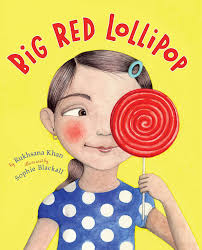
Big Red Lollipop By Rukhsana Khan Illustrated by: Sophie Blackall
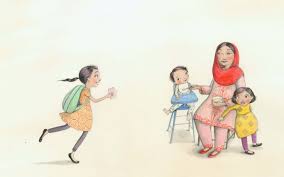
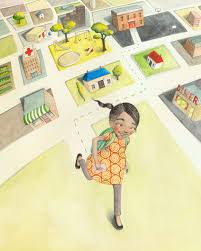
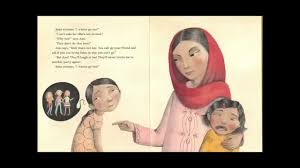
As the oldest of five, Big Red Lollipop is a book that resonated with me. Family dynamics and expectations are complicated and often feel unfair. Yet, the blessings of a family often outweigh the frustrations. The themes in Kahn’s (2015) book were easy to relate to. What makes this book realistic fiction? 1. The story includes a moral, but the moral does not overwhelm the story. The reader is allowed to draw their own conclusions and is not told how to think or feel. 2. While this is not a true story, it could be. 3. There is hope. As the story unfolded, I felt so frustrated for Rubina, but I ended up with feelings of peace and endearment as the story resolved. 4. Rubina is a believable character. Her behavior is age appropriate and she grows and learns over the course of the book. 5. This book did not purport stereotypes. 6. Even the minor characters were believable. (Short et al., 2018, p. 123) Ilustrations: Leslie Blackall uses water color-and-pencil illustrations to add meaning to the book. Her illustrations do not distract from the story and help to create a beautiful and poignant book. The colors are often vibrant and give a feeling of movement. Blackall does a great job of portraying the emotions felt by Rubina. First, Rubina’s excitement of being invited to her first birthday party:
Then her slumped shoulders visibly show her disappointment and angst when her sister is allowed to go with her to the birthday party she was invited to:
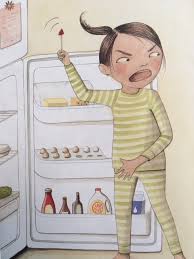
Rubina’s indignant rage upon discovering her sister, Sana, ate her lollipop:
The feelings of being left out at school because she was different:
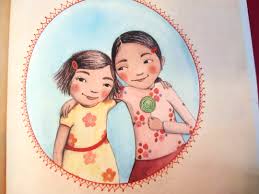
Finally, the love between siblings that can happen even in the wake of the most blatantly cruel act of lollipop thievery:
Classroom Connection: Descriptive Words/Imagery
Students will use 3 words or less to describe how they felt when: –Rubina’s sister, Sana, was allowed to go to the birthday party with her –Rubina’s sister ate her lollipop –Ami scolded Rubina for not sharing –Sana brought Rubina a green lollipop Class will come together and take turns writing one of their words on the board. Class will discuss what one of their classmates words made them feel or see.
Reader’s Response:
Students will choose one part of the book they would change Students will write and explain why they would change this part Students can rewrite this section if time allows
I laughed, I cried, and I squealed with delight at the genius of these authors and illustrators as I read this week. The amazing imagery, metaphors, similes, alliteration, hyperbole, rhyming for emphasis or entertainment, and repetition created an avenue that allowed my imagination to run wild. Difficult topics were explored. There were times that I wondered if I would read these to young readers. Yet, the feelings, subject matter, and reactions are everyday realities for many young readers. By addressing difficult subject matter within these two genres, I believed readers would be able to go only as deep as their understanding allowed. This would also allow for conversation and emotional growth as a class. I found that I agreed with what our textbook said about the ability of this genre to address difficult topics (Short et al. p. 108-109). I, myself, found that the jump between reality and fantasy allowed me to experience real life and then escape for a glorious moment before going back to reality. It offered an emotional break.
The reading for this week was by far my favorite and included these books:
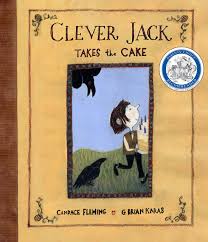
Clever Jack Takes the Cake Author: Candace Fleming Illustrator: G. Brian Karas Published in: 2010 Parents’ Choice Recommended
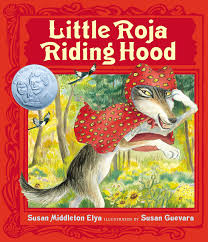
Little Red Roja Riding Hood Author: Susan Middleton Elya Illustrator: Susan Guevara Published in: 2014 Pura Belpre Illustrator Award: 2015
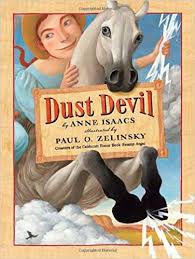
Dust Devil Author: Anne Isaacs Illustrator: Paul O. Zelinsky Published in: 2010
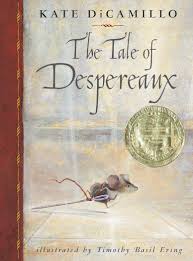
The Tale of Despereaux Author: Kate DiCamillo Illustrator: Timothy Basil Ering Published: 2003 Newberry Medal Winner 2004
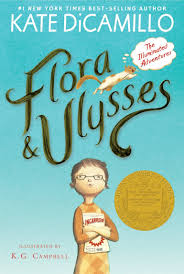
Flora & Ulysses: The Illuminated Adventures Author: Kate DiCamillo Illustrator: K.G. Campbell Published: 2015 Newberry Medal Winner: 2014 For ages 8-12
Who can say what astonishments are hidden inside the most mundane being?
The titles and captions alone are a reason to read this Kate DiCamillo book! Flora and Ulysses: The Illuminated Adventures contained short and superbly written chapters such as: “A Natural-Born Cynic”, “The Squirrel Obliges”, “In the Event of A Seizure”, & “Victims of Extended Hallucinations”. I think it would hold the attention of kids and adults alike.
The book began with a comic-strip introduction.
Ending of the opening comic
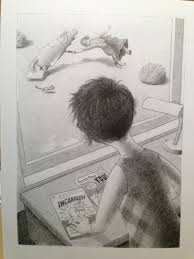
The illustrations in this book were in black, white, and gray and appear to be drawn with charcoal pencil. Pictures included exaggerated characteristics and expressions which helped to reinforce the written story. They could carry the story when words were scarce or non-existent. Illustrations appeared about every second to fourth page and absolutely made this book even more exceptional. Some illustrations were comic-strips, some were simply pictures of scenes written about in the book, and still others told the next scene of the book in which there were no words.
This book fit into the Fantasy category and I found would not be classified as a fairy tale or myth because it was written by a known author. Next, while much of the story could be true, it could not take place on Earth as we understand it. Conversely, this book would not be Science Fiction because it could not take place in the world as we currently understand it, nor could it realistically happen even if technology advanced. Finally, I would classify this book as fitting into the Fantasy subcategory called Animal Fantasy which includes talking animals since Ulysses, the squirrel, a main character reflects this.
I found each character was well developed because as it stated in our textbook, each main character was “believable and well-rounded…develops and changes” (Short et al., pg. 108). Additionally, the characters each served a purpose and were meaningfully connected to each other and the plot of this story.
(L to R): Dr. Meescham, William Spiver, Flora, Ulysses (squirrel), Phyllis and George Buckman, Mary Ann the Shepherdess (lamp), Tootie (Mrs. Tickham)
Rita the Waitress
The theme of this book definitely focused on “what it means to be human in a complex world”(Short et al., p. 109) as it discussed divorce, the desire to belong, and the want to feel at home. However, this book did not provide an alternative world. It was set on Earth as we understand it. I found the only thing that makes this book Fantasy would be Ulysses the squirrel and his human and super-human characteristics and abilities. Finally, Flora does not fit the societal norms for a typical girl. Our textbook told us this theme is often reflected within the Fantasy genre. Flora’s hair was short, she was strong-willed, she loved her comic-books and squirrel more than romance novels and playing with dolls, and her closest human friend was a boy, William Spiver who also did not fit the societal norms for a boy.
William Spiver
Flora and Ulysses
This book was reminiscent of Junie B. Jones where the main character was strong-willed and a bit sassy. The words “stupid” and “idiotic” were used frequently. Additionally, the emotions and subject matter were deep and might require some maturity. I would not hesitate to use this book in a classroom where kids were closer to age 11-12. I would not feel comfortable reading this book until I had a well-established rapport with my students in which we could safely address thoughts, feelings, and reactions brought about by this book.
Classroom Connection: for grades 4-6 Before reading the book for the first time, I would ask the students to consider what it means to be a cynic. I would explain that one of the main characters, Flora, describes herself as a “natural-born cynic”. I would write the word on the board and ask students to help me unpack cynic (tell me their ideas of what this might mean) I would ask students to make a mark every time they heard the word “cynic” and jot down what they think the story is telling us cynic means (I would pause to allow for this). Once I was done reading (10 minutes), I would have my students work in groups of 2 or 3. Each group would receive a copy of the chapters we read. They would count how many times they see the word, circling it each time (this way they could find it easily for the next part). I would ask them to use the text to support what they think a cynic is. We would come back together as a large group and discuss our findings. When we finished the book, I would ask students to meet in groups to discuss their initial understanding of cynic and what they now understand it means (along with other concepts we discussed during the course of reading the book).
Reader’s Response: for grades 4-6 I would write the word “infer” on the board and unpack the word Then I would write the names of the characters we read about in the chapters that day. I would ask students to __list the characters in their notebook __describe character connections (mom, dad, friend, lamp, pet etc) __or use a character map to show connections __then make a prediction for what comes next for one of the characters using support from the text and what they think it “infers” I would ask students to repeat this process at different points in the reading of the book. I would ask students to write an evaluation of their growth and learning in all areas they wrote about once book was finished.
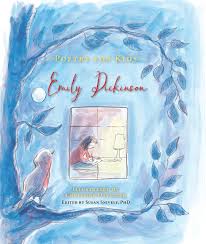
Poetry for Kids Poetry: Emily Dickinson Illustrations: Christine Davenier Edited: Susan Snively, PhD Published: 2016
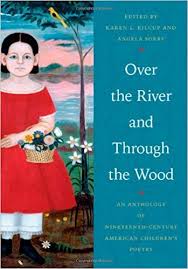
Over the River and Through the Wood: An Anthology of Nineteenth- Century American Children’s Poetry Edited: Karen L. Kilcup & Angela Sorby Published: 2014
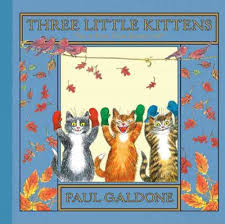
Three Little Kittens: A Folktale Classic Illustrations: Paul Galdone Published: 1986
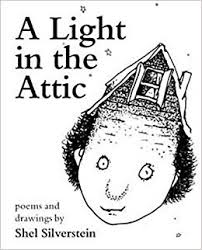
A Light in the Attic Poems and Drawings: Shel Silverstein Published: 1981
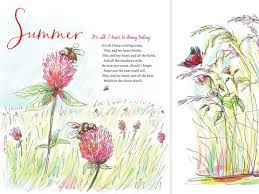
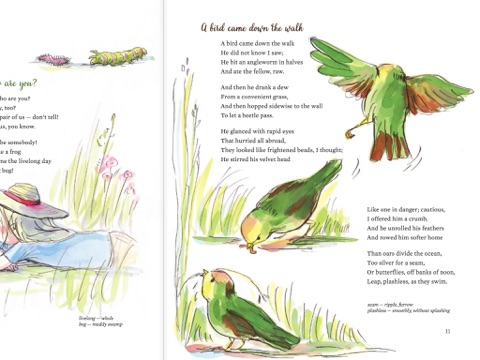
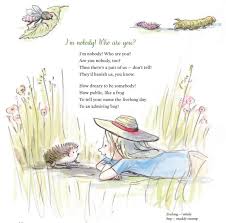
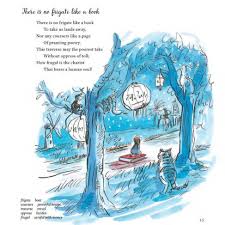
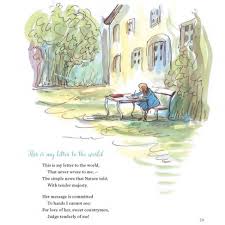
Poetry for Kids is a beautifully illustrated selection of Emily Dickinson’s poems. These poems appeal to children as they discuss nature: seasons, insects, birds and the like. They also use nature to discuss emotions and life events, leaving it up to the reader to draw personal conclusions. I felt calm, curious, and captivated as I turned the pages, reading the poetry and taking in the emotion-evoking pictures. Through word and picture, the ideas were concrete enough that both are understood without effort. Yet, somehow, there seemed to be space left for interpretation and imagination. I was pleasantly surprised to see definitions of more challenging words included at the end of certain poems. Examples included: moor, ethereal, plashless, and quibbled. The ideas interwoven inside the poems made them appealing for a wide range of ages. While the pictures can be enjoyed by all ages, the implied and somewhat mature topics addressed in the poems, as well as word choice, and the use of cursive made this picture book seem better suited for those in grades 3-6.
Illustrations: Christine Davenier used soft, rich and vibrant watercolors to bring movement, create mood, and enhance the pictures created with Dickinson’s poetic words. For the poem A bird came down the walk, Davenier used curved lines to illustrate the birds wings, the ripples in the water, the shape of leaves, and the movement of the tall grass. She used straight lines for the tail of the bird, vertical lines to show grass standing tall.
Her use of line brought realistic elements to her watercolor illustrations. Her color palate mimicked those found during various seasons or symbolic of certain moods. For spring and summertime: vibrant greens, soft yellow-green, and yellows; for nighttime: deep and subdued blues and grays.
She used darker and more ethereal colors to reflect adversity, deep or complex emotion, death or poems set at night.
Her color palette and use of line created ideas and concepts that gave a clear idea but still left room for children and adults to use their imaginations. I found her illustrations were both expressionistic and impressionistic.
Classroom Connection: I would select 3 poems to read aloud. Before reading the poems, I would ask the students to consider while I read which poem they thought was only about nature, which one had a hidden meaning, and which one was about a human life event. I would then divide students into groups, provide them each with a copy of the poems and give them time to discuss why they put the poems into the categories they did. I would ask that they consider each poem could have multiple meanings.
Reader’s Response: Lift-a-line: Students choose one poem from the three on the handout Select a line or picture that stood out to them–positive or negative Write for 5 minutes about why this line or picture stood out to them and what they liked or did not like about the line or picture
“The only effect I ardently long to produce by my writings, is that those who read them should be better able to imagine and to feel the pains and the joys of those who differ from them in everything but the broad fact of being struggling, erring human creatures.” George Eliot
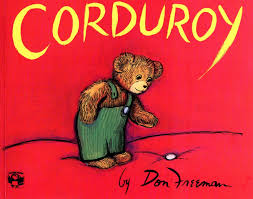
Corduroy Written and Illustrated by Don Freeman Published in 1968
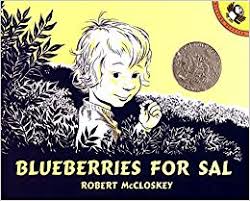
Blueberries for Sal Written and Illustrated by Robert McCloskey Published in 1948
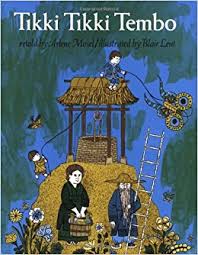
Tikki Tikki Tembo Retold by Arlene Mosel Illustrated by Blair Lent Published in 1968
For my selections this week, I chose three childhood books that hold fond memories of reading with my mom and grandpa, and kept me engaged. I decided to review Corduroy because I felt I could better use this book within a classroom setting. However, Blueberries for Sal is probably the book I hold dearest. Robert McCloskey is one of my favorite authors and illustrators because his books relate directly to my own childhood experiences. Additionally, McCloskey’s illustrations are incredible. He often uses only one color of ink throughout the book’s illustrations. His use of line, “colored in” and “textured”, along with negative space creates motion, emotion, and mood. I remembering spending hours just looking at his illustrations before I could read the words.
Overview: Corduroy by Don Freeman is an all-time favorite story of mine; it still pulls me in and tugs at my heart strings. This tugging, created through Freeman’s use of language and illustrations, teaches compassion, empathy and what a positive impact these can have in our lives. Two of the prominent characters represent and portray an African American mother and daughter in a normal everyday situation. This creates a work of literature that does not follow the predominantly white demographic of books used within schools in the United States. I did not find the book to be stereotypical as it seemed to represent the time it was set in. I realize I might not be the best judge of this. I welcome your feedback regarding this. Finally, I found that this story represents attitudes and challenges most children and adults can relate to in their every day lives. Illustrations: One of the things I enjoy most in this book are the pictures. The expressions of Corduroy, the other stuffed animals, the mother and daughter, and the night watchman combined with their body language supports and deepens the understanding of Don Freeman’s words.
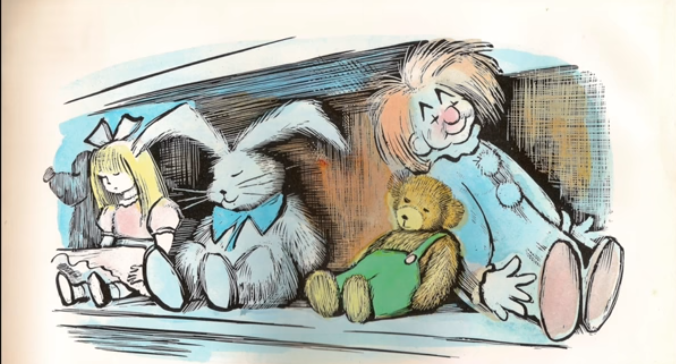
Corduroy and the other stuffed toys asleep on their shelf.The night watchman investigating the loud CRASH!
The perspective of each picture often represents eye-level for Corduroy and the little girl, Lisa, creating a relevant point of view for young readers. Freeman’s use of colors: soft, warm and vibrant, creates mood and draws attention to the important characters and events happening on each page. His use of textures and patterns creates depth and motion. Additionally, in the more dramatic and suspenseful scenes, Freeman uses a dark black background in contrast to the lighter and more open spaces to create impact and tension.
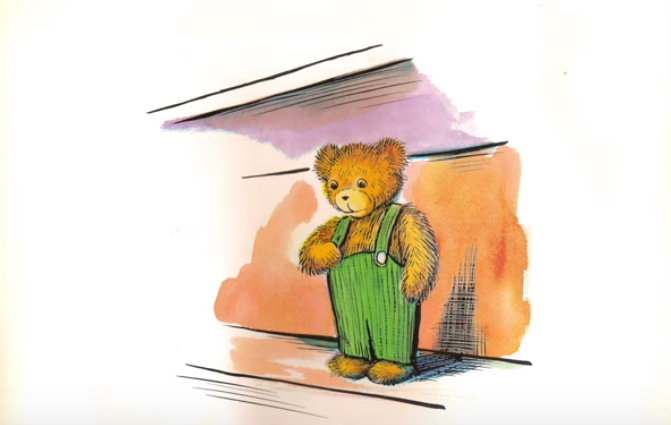
Note the dark background contrasting with the lighter background, not only portraying the path of the light as the lamp tips, but adding to the drama and intensity of Corduroy’s fall.
Syntax: Freeman uses short sentences, manageable words, and very few sentences per page. This makes the story understandable for a young listener, achievable for a newer reader, and builds suspense for what will happen on the next page. This also allows the storyteller to look up from the page and at their readers as the phrases and sentences are easy to “memorize” at a glance. Instead of simply telling us what is being seen or happening, Freeman uses his illustrations, dialogue, and his character’s thoughts to pull children and adults into this book. Examples include: Corduroy’s thoughts on the escalator combined with this picture:
“Could this be a mountain?”
Corduroy’s thoughts about the showroom combined with this picture:
“This must be a palace.”
This story also speaks to relevant life issues and concerns both children and adults can relate to: Not having the money to purchase what we want:
“I’ve spent too much already.”
The desire to belong and what we are willing to do to feel whole:
“I didn’t know I’d lost a button.”Corduroy’s struggle to acquire the button that will make him whole and a desirable purchase.
Saving up to buy something:
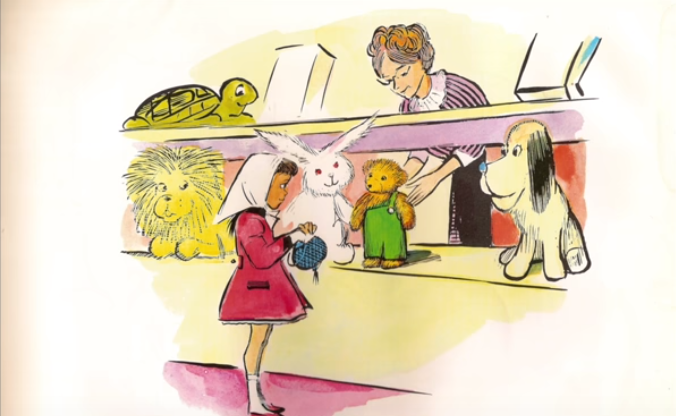
“Last night I counted what I’ve saved in my piggy bank and my mother said I could bring you home.” I also enjoyed this illustration because you can see the hope on the other animals’ faces. Note how their bodies are turned towards Lisa. You can hear them thinking, “Pick me!” We all want to feel important and desired.
The desire for a place that feels like home:
“This must be home… I know I’ve always wanted a home.”
The story concludes with Lisa and the Corduroy becoming friends which teaches yet another important lesson. Sometimes our truest friends are those: 1. we think are least like us. 2. we fail to consider in the beginning. 3. we help and end up being helped ourselves.
“You must be a friend, ” said Corduroy. “I’ve always wanted a friend.” “Me, too!” said Lisa, and gave him a big hug.
Classroom Connections: After book is read aloud to students: Students will share with one classmate: a. something they are saving for, saved for, or would like to save for–how they did this, are doing this, or might do this b. a time someone was kind to them when they felt like no one cared/noticed them
Reader’s Response: “Lift-a-Line” Teacher reads book a second time. Students listen for/look for a phrase or sentence or picture that stands out to them. Students immediately write what this is in their notebook. Once teacher is finished reading: Students explain in their writing why this stood out to them and what it means to them.
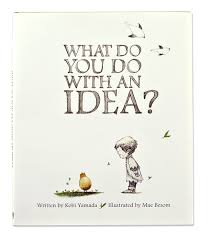
WHAT DO YOU DO WITH AN IDEA? BY KOBI YAMADA ILLUSTRATED BY MAE BESOM This book surprised me and will be the focus for most of this blog. To begin with, I listed the other books I read below:
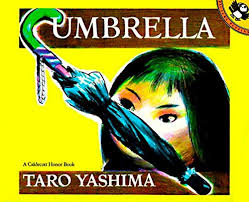
Umbrella Written and Illustrated by Taro Yashima Published in 1958
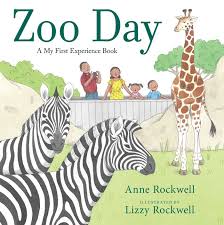
Zoo Day Written by Anne Rockwell Illustrated by Lizzy Rockwell Published 2017
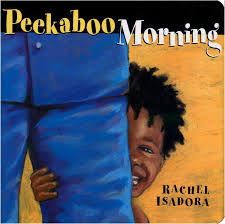
Peekaboo Morning Written and Illustrated by Rachel Isadora Published 2002
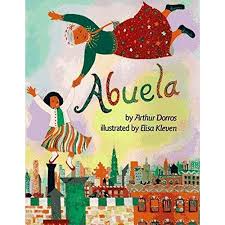
Abuela Written by Arthur Dorros Illustrated by Elisa Kleven Published 1991
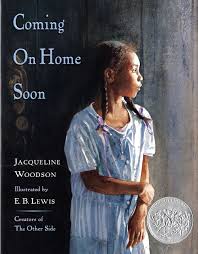
Coming On Home Soon Written by Jacqueline Woodson Illustrated by E.B. Lewis Published 2004
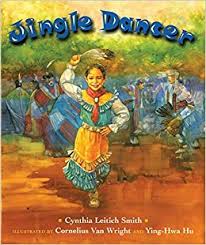
Jingle Dancer Written by Cynthia Leitich Smith Illustrator by Cornelius Van Wright and Ying-Hwa Hu Published 2000
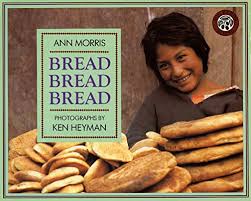
Bread Bread Bread Written by Ann Morris Photographs by Ken Heyman Published 1989
What Do You Do With An Idea? Written by Kobi Yamada Illustrated by Mae Besom Published 2013
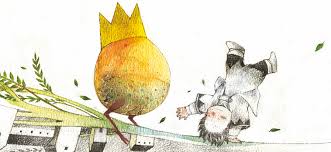
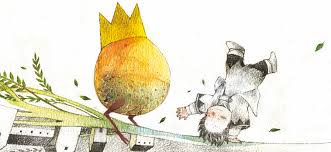
While the title grabbed me: What Do You Do With An Idea?, the muted colors and simplicity of the cover’s illustrations left me wondering. I was curious enough to continue. As I jumped into the book, I quickly understood the reason for the muted and simplistic illustrations. The idea, represented by the egg on the cover of the book, is a bright yellow color which contrasts with the muted colors, drawing the reader’s attention towards this egg or idea.
As the story develops, and its chronological plot unfolds, more and more color appears in the pictures; the color becomes less subdued and more vibrant. However, the color is only applied to the things that are a result of or part of the idea, painting an amazing visual for the reader as to what exploring your idea can create while keeping the reader focused on the idea.
The reader can make better sense of the story through Mae Besom’s use of line, space, positioning of the boy and the egg, and color that shows emotion, movement drawing the reader towards the important moments of each page. Additionally, as the boy thinks about the idea, and the idea increases, the egg also increases in size and proximity to the boy. I thought the illustrations made this book come alive.
I found the author to be excellent as well. He used clear and simple language that included me in the story. I felt like the author was having a conversation with me about something really important that happened in his life. This drew me in. I could instantly relate to what he was feeling and why. I thought most school-age kids would be able to as well. The author, Kobi Yamada, provided inspirational phrases within the book that really pulled on my heart strings.
“It is good to have the ability to see things differently.”
The ending of his book stayed with me for a while:
“And then, I realized what you do with an idea…You change the world.”
Classroom Connections Activity: Discussion: 15 minutes -Work in groups of 2-4 and share your answers to these questions-8 minutes -What did you think of the pictures in the book? -Would you read this book if it didn’t have pictures? Why or why not? -Would you read this book if it only had pictures? Why or why not? -Why was there an egg in the pictures? -Discuss as entire class–5 minutes
Reader’s Response: Summarize in Reading Notebook: 5-7 minutes (Fab Five strategy, Notebook Connections, p.55-56): -Who (is the main character)? -Wants what? -But? -So? -Then?
“Reading can be a road to freedom or a key to a secret garden, which, if tended, will transform all of life.” Katherine Paterson
My name is Ruth. It’s nice to meet you!
I have lived in the state of Washington most of my life and cannot imagine a better place to live. Even though I have traveled throughout the United States, I have yet to find a place I would rather be. I grew up hiking, camping and backpacking in this beautiful state–some of my best memories. Shortly after high school, I married my high school sweetheart, Jason. We have one child, Jenai (20), and two dogs Molly (12) & Yoda (8). I waited 18 years to go to college as we focused on raising our daughter and enjoying the years she was home. I am really excited to be pursuing my teaching degree and even more excited to finally be taking classes pertaining to my major.
Reading has been a part of my life since I was a young child. My mom read aloud to us each day and encouraged us to read independently. Before college, I would read at least a book a week. Since starting college, my goal is to read one book for pleasure each quarter and to read my Bible daily. It has been a struggle to meet this goal since my eyes are often tired from homework reading. Additionally, it has been more challenging to find books that grab and keep my interest; I don’t enjoy the process of discovering new authors like I used to. These two things definitely discourage me from reading for pleasure.
My career goals are to focus more on learning and less on grades, attain my Elementary Education degree with an endorsement in Highly Capable, and become more concise in writing and verbal communication.
Personal goals include making time to be out in nature either hiking or walking.
My career dream is to incorporate music and nature into my classroom.
My personal dream is to play volleyball and softball again. A toe injury a few years back started that vicious cycle of getting and staying out of shape. 😉
My aspiration is to be committed to life-long learning, growing emotionally and intellectually. I believe this will not only give me emotional and intellectual depth, but will also increase my empathy for my students who are in a constant state of learning and growth.
I am pumped to be “forced” to read some excellent children’s literature 😉 and look forward to learning from each of you. 🙂
Jenai @ Ingalls Peak w/ Mount Stuart in the background










 Ruth's Reading Reflections