
I laughed, I cried, and I squealed with delight at the genius of these authors and illustrators as I read this week.
The amazing imagery, metaphors, similes, alliteration, hyperbole, rhyming for emphasis or entertainment, and repetition created an avenue that allowed my imagination to run wild.
Difficult topics were explored. There were times that I wondered if I would read these to young readers. Yet, the feelings, subject matter, and reactions are everyday realities for many young readers. By addressing difficult subject matter within these two genres, I believed readers would be able to go only as deep as their understanding allowed. This would also allow for conversation and emotional growth as a class. I found that I agreed with what our textbook said about the ability of this genre to address difficult topics (Short et al. p. 108-109). I, myself, found that the jump between reality and fantasy allowed me to experience real life and then escape for a glorious moment before going back to reality. It offered an emotional break.
The reading for this week was by far my favorite and included these books:
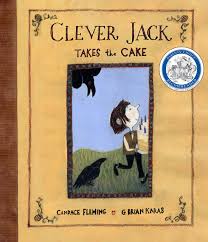
Author: Candace Fleming
Illustrator: G. Brian Karas
Published in: 2010
Parents’ Choice Recommended
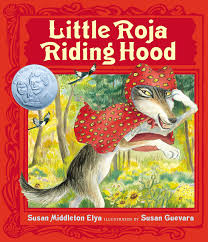
Author: Susan Middleton Elya
Illustrator: Susan Guevara
Published in: 2014
Pura Belpre Illustrator Award: 2015
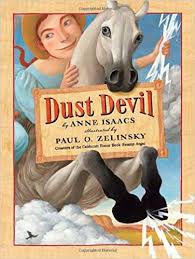
Author: Anne Isaacs
Illustrator: Paul O. Zelinsky
Published in: 2010
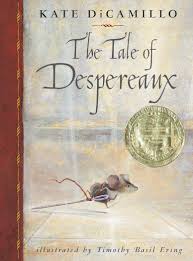
Author: Kate DiCamillo
Illustrator: Timothy Basil Ering
Published: 2003
Newberry Medal Winner 2004
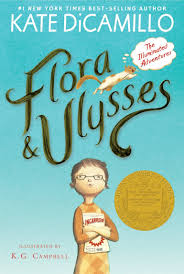
The Illuminated Adventures
Author: Kate DiCamillo
Illustrator: K.G. Campbell
Published: 2015
Newberry Medal Winner: 2014
For ages 8-12
The titles and captions alone are a reason to read this Kate DiCamillo book! Flora and Ulysses: The Illuminated Adventures contained short and superbly written chapters such as: “A Natural-Born Cynic”, “The Squirrel Obliges”,
“In the Event of A Seizure”, & “Victims of Extended Hallucinations”.
I think it would hold the attention of kids and adults alike.
The book began with a comic-strip introduction.
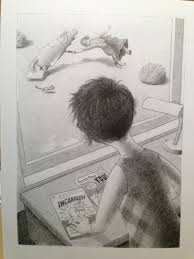
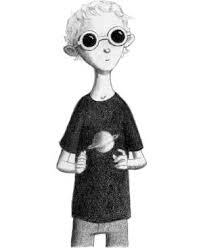
The illustrations in this book were in black, white, and gray and appear to be drawn with charcoal pencil.
Pictures included exaggerated characteristics and expressions which helped to reinforce the written story. They could carry the story when words were scarce or non-existent. Illustrations appeared about every second to fourth page and absolutely made this book even more exceptional.
Some illustrations were comic-strips, some were simply pictures of scenes written about in the book, and still others told the next scene of the book in which there were no words.
This book fit into the Fantasy category and I found would not be classified as a fairy tale or myth because it was written by a known author. Next, while much of the story could be true, it could not take place on Earth as we understand it. Conversely, this book would not be Science Fiction because it could not take place in the world as we currently understand it, nor could it realistically happen even if technology advanced.
Finally, I would classify this book as fitting into the Fantasy subcategory called Animal Fantasy which includes talking animals since Ulysses, the squirrel, a main character reflects this.
I found each character was well developed because as it stated in our textbook, each main character was “believable and well-rounded…develops and changes” (Short et al., pg. 108). Additionally, the characters each served a purpose and were meaningfully connected to each other and the plot of this story.
The theme of this book definitely focused on “what it means to be human in a complex world”(Short et al., p. 109) as it discussed divorce, the desire to belong, and the want to feel at home. However, this book did not provide an alternative world. It was set on Earth as we understand it. I found the only thing that makes this book Fantasy would be Ulysses the squirrel and his human and super-human characteristics and abilities. Finally, Flora does not fit the societal norms for a typical girl. Our textbook told us this theme is often reflected within the Fantasy genre. Flora’s hair was short, she was strong-willed, she loved her comic-books and squirrel more than romance novels and playing with dolls, and her closest human friend was a boy, William Spiver who also did not fit the societal norms for a boy.
This book was reminiscent of Junie B. Jones where the main character was strong-willed and a bit sassy. The words “stupid” and “idiotic” were used frequently. Additionally, the emotions and subject matter were deep and might require some maturity. I would not hesitate to use this book in a classroom where kids were closer to age 11-12. I would not feel comfortable reading this book until I had a well-established rapport with my students in which we could safely address thoughts, feelings, and reactions brought about by this book.
Classroom Connection: for grades 4-6
Before reading the book for the first time, I would ask the students to consider what it means to be a cynic.
I would explain that one of the main characters, Flora, describes herself as a “natural-born cynic”.
I would write the word on the board and ask students to help me unpack cynic (tell me their ideas of what this might mean)
I would ask students to make a mark every time they heard the word “cynic” and jot down what they think the story is telling us cynic means (I would pause to allow for this).
Once I was done reading (10 minutes), I would have my students work in groups of 2 or 3. Each group would receive a copy of the chapters we read. They would count how many times they see the word, circling it each time (this way they could find it easily for the next part).
I would ask them to use the text to support what they think a cynic is.
We would come back together as a large group and discuss our findings.
When we finished the book, I would ask students to meet in groups to discuss their initial understanding of cynic and what they now understand it means (along with other concepts we discussed during the course of reading the book).
Reader’s Response: for grades 4-6
I would write the word “infer” on the board and unpack the word
Then I would write the names of the characters we read about in the chapters that day.
I would ask students to
__list the characters in their notebook
__describe character connections (mom, dad, friend, lamp, pet etc)
__or use a character map to show connections
__then make a prediction for what comes next for one of the characters using support from the text and what they think it “infers”
I would ask students to repeat this process at different points in the reading of the book.
I would ask students to write an evaluation of their growth and learning in all areas they wrote about once book was finished.
 Ruth's Reading Reflections
Hi Ruth,
I read Flora & Ulysses too! I never would have imagined that a children’s book would make me laugh so hard. I understand why this book won the Newberry Medal. The illustrations are great, and I appreciated the comic panel styling. The images of Ulysses are so precious! Great classroom connection that helps students use context to gain understanding.
-Leah D.
LikeLike